
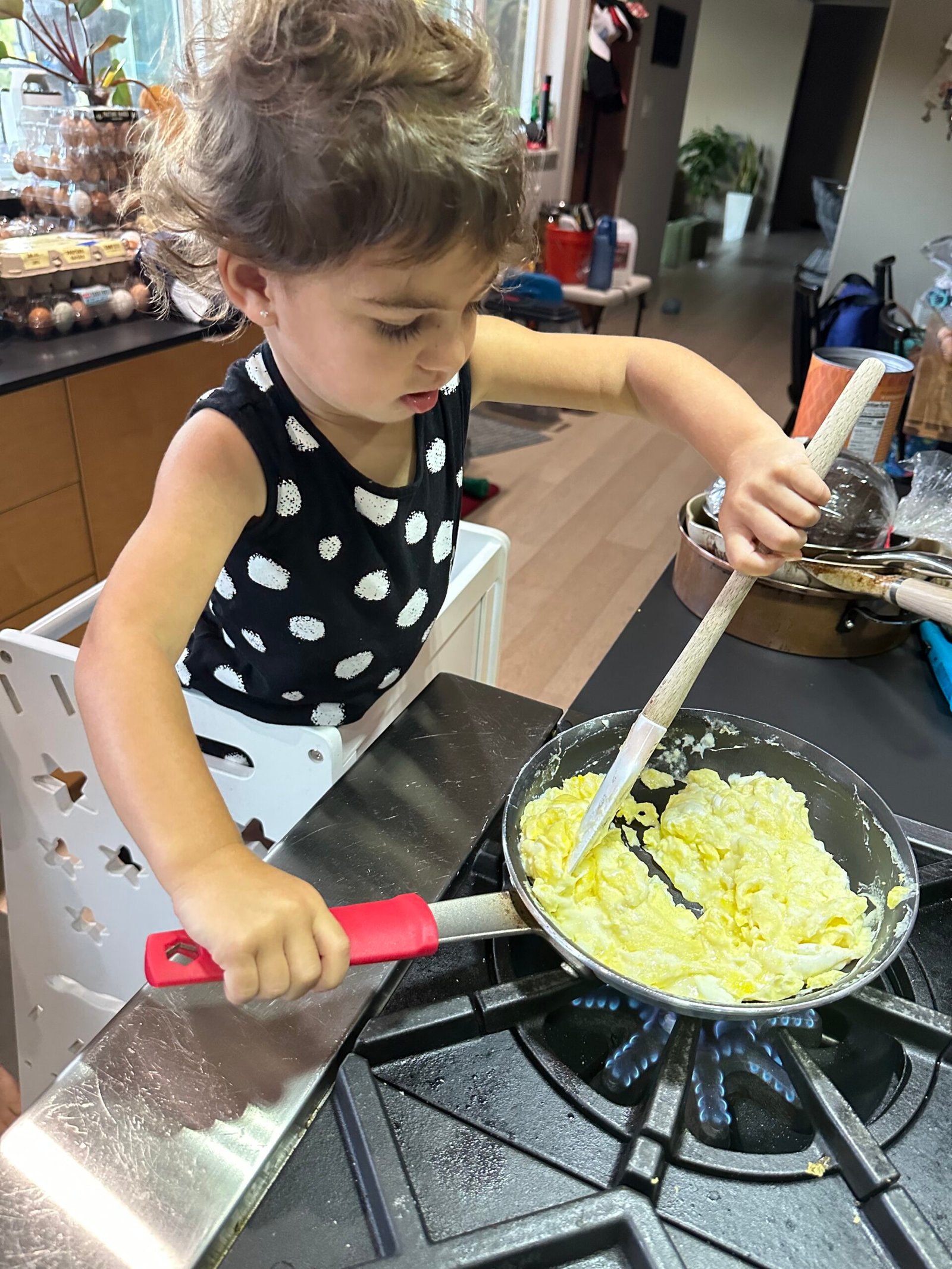
Welcome, parents and guardians of future world-changers! Are you tired of imagining a future where your grown child calls you to ask how to boil water or operate a washing machine? Fear not! The Montessori method is here to save you from a lifetime of being your adult child’s personal Google. Buckle up as we explore how Montessori education turns tiny humans into capable, confident, and dare we say, actually useful members of society!
Why Montessori for Real Life? (Because “Adulting” Shouldn’t Be a Trending Hashtag)
Before we dive into the nitty-gritty of how Montessori creates mini-adults, let’s talk about why this approach is more essential than ever in preparing kids for the real world:
- Independence: Because mom and dad won’t always be there to cut the crust off their sandwiches.
- Problem-Solving Skills: For when life throws lemons, and Google doesn’t have the answer.
- Confidence: To face challenges head-on, instead of hiding under the covers (tempting as that may be).
- Practical Life Skills: So they don’t have to YouTube “How to adult” in their 20s.
- Social Competence: Because interacting with humans is (unfortunately) still a necessary life skill.
The Montessori Magic: Turning Toddlers into Tiny Capable Humans
So, how exactly does Montessori pull off this miraculous transformation from helpless babes to independent beings? Let’s break it down:
1. The Prepared Environment: A Miniature World of Possibilities
Imagine a world perfectly tailored to your size and abilities, where everything is within reach and designed for your success. No, we’re not talking about Lilliput – we’re talking about a Montessori classroom!
- Child-Sized Everything: Furniture, tools, and materials scaled for small hands and bodies. It’s like a dollhouse, but functional!
- Orderly Arrangement: Everything has its place, teaching organization and respect for the environment. Marie Kondo would be proud.
- Freedom of Choice: Materials are openly displayed, encouraging self-directed learning. It’s like a buffet of knowledge – sample everything!
- Reality-Based Materials: Real tools for real tasks. No plastic fake food here – we’re cooking with real ingredients (under supervision, of course).
2. Practical Life Activities: Adulting 101
Forget fingerpainting (okay, don’t forget it entirely, it’s still fun). Montessori kids are out here doing real-life tasks that many adults still struggle with:
- Food Preparation: From spreading butter to cooking simple meals. Gordon Ramsay, watch out!
- Cleaning and Organization: Sweeping, dusting, and tidying up. Your future college roommate will thank us.
- Dressing Skills: Mastering buttons, zips, and laces. No more Velcro dependency!
- Plant and Pet Care: Nurturing living things teaches responsibility. Start with a cactus, work up to a puppy.
3. Mixed-Age Classrooms: A Society in Miniature
Why settle for same-age peer groups when you can have a mini United Nations?
- Peer Learning: Younger children learn from older ones, older children reinforce knowledge by teaching.
- Social Skills: Interacting with various ages improves communication and empathy. It’s networking for kids!
- Leadership Opportunities: Older children naturally take on mentoring roles. It’s like being the cool older sibling, without the sibling rivalry.
- Conflict Resolution: Learning to navigate social dynamics in a supportive environment. Less “Lord of the Flies,” more “Model UN.”
4. Freedom Within Limits: The Art of Responsible Choice-Making
Montessori classrooms are not a free-for-all. They’re more like a choose-your-own-adventure book, but with better educational outcomes:
- Choice of Activities: Children select their work, fostering intrinsic motivation. No more “But I don’t wanna!”
- Time Management: Freedom to work at their own pace teaches self-regulation. It’s like a tiny project manager in training.
- Natural Consequences: Actions have results, teaching cause and effect. Spilled water? Here’s a mop – life lessons in action!
- Respect for Others: Freedom comes with responsibility towards the community. It’s democracy, preschool style.
5. Hands-On Learning: Because Life Doesn’t Come with a Multiple-Choice Test
Forget rote memorization and standardized tests. Montessori learning is as hands-on as it gets:
- Concrete to Abstract: Start with tangible experiences before moving to concepts. It’s like training wheels for the brain.
- Experimentation: Trial and error is encouraged. It’s not failure, it’s data collection!
- Interdisciplinary Approach: Subjects aren’t isolated but interconnected. Just like in the real world!
- Sensory Exploration: Learning engages all the senses. It’s like a full-body workout for the brain.
Real-Life Skills Montessori Kids Master (That Many Adults Still Struggle With)
Ready to feel simultaneously impressed and slightly inadequate? Here’s a list of skills many Montessori kids master before they’re out of elementary school:
- Financial Literacy:
- Understanding the value of money through practical activities.
- Basic budgeting and saving concepts.
- The ability to make change without a calculator (gasp!).
- Time Management:
- Planning and prioritizing tasks.
- Understanding the concept of deadlines.
- The mystical ability to be on time without 17 reminders.
- Conflict Resolution:
- Communicating feelings effectively.
- Finding win-win solutions.
- Not resorting to “But Mom said!” as a problem-solving technique.
- Environmental Responsibility:
- Understanding ecological interdependence.
- Practicing conservation and recycling.
- The ability to sort trash without a 15-minute existential crisis at the bins.
- Cultural Awareness:
- Appreciating diversity and different cultures.
- Basic understanding of world geography.
- Knowing that not everyone celebrates Taco Tuesday (but they probably should).
From Montessori to the Real World: Success Stories That’ll Make You Want to Go Back to Preschool
Still not convinced that letting toddlers loose with real tools and responsibilities is the way to go? Let’s look at some famous Montessori alumni who turned out okay (understatement of the century):
- Jeff Bezos (Amazon Founder): From carefully arranging blocks to efficiently arranging worldwide logistics. Coincidence? We think not.
- Larry Page and Sergey Brin (Google Founders): Their early Montessori training in finding creative solutions clearly paid off. Now they help us find everything else.
- Julia Child: Montessori practical life activities walked so her French cuisine could run. Bon appétit!
- Prince William and Prince Harry: Proof that even royalty benefits from learning how to tie their own shoelaces.
Bringing Montessori Home: No, You Don’t Need to Rebuild Your House
Want to incorporate some Montessori magic into your home without converting your living room into a preschool? Here are some easy ways to start:
- Create a “Yes” Space:
- Designate an area where your child can freely explore and work.
- Keep it stocked with age-appropriate, real-life materials.
- Resist the urge to childproof it to the point of sterility. A few bumps and spills are part of the learning process!
- Involve Children in Daily Tasks:
- Cooking, cleaning, laundry – it’s all learning material!
- Yes, it’ll be slower and messier at first. No, your three-year-old’s idea of a “folded” shirt won’t match yours. It’s fine.
- Remember: Short-term inconvenience for long-term independence. Keep breathing.
- Foster Independence in Personal Care:
- Set up a self-care station with tooth-brushing, hair-combing essentials.
- Allow extra time for them to dress themselves.
- Embrace the mismatched socks and backwards shirts. It’s called fashion, look it up.
- Encourage Problem-Solving:
- Resist the urge to swoop in and fix everything.
- Ask guiding questions instead of giving direct solutions.
- Celebrate the process, not just the outcome. Even if the outcome is a little… unconventional.
The Do’s and Don’ts of Raising a Montessori-Inspired Real-Life Ready Kid
Before you release your little one into the wild world of independence, keep these tips in mind:
Do:
- Trust in your child’s abilities. They’re more capable than you think!
- Allow for natural consequences (within reason). Sometimes experience is the best teacher.
- Model the behavior and skills you want to see. Yes, that means you have to adult properly too.
- Embrace the mess. Learning is rarely a tidy process.
- Celebrate efforts and progress, not just perfect outcomes.
Don’t:
- Hover or helicopter parent. Step back and watch the magic happen.
- Compare your child’s progress to others. Every tiny human develops at their own pace.
- Forget that emotional skills are just as important as practical ones.
- Expect perfection. We’re preparing them for real life, not a TV show.
- Underestimate the power of a supportive, “You’ve got this!” Sometimes, that’s all they need.
The Final Bell: Graduating to Real Life
Congratulations! You’re now equipped to raise a child who won’t need to call you to ask how to boil an egg or operate a washing machine when they’re 25. Remember, the goal of Montessori isn’t to create perfect little adults (because, let’s face it, most of us grown-ups are still figuring it out). The aim is to foster confident, capable, curious individuals who aren’t afraid to tackle life’s challenges head-on.
So, embrace the spills, celebrate the wobbly first attempts, and watch in awe as your little one transforms into a competent, confident big one. And when the day comes that they call you, not to ask how to do something, but to share their latest accomplishment, you’ll know it was all worth it.
Now, if you’ll excuse me, I have a date with a 2-year-old who’s insisted on making dinner tonight. I’m not sure what we’re having, but I’m pretty sure it involves peanut butter and optimism. Wish me luck – I may need it more than they do!
Remember, in the grand experiment of raising self-sufficient humans, there will be messes, mistakes, and moments of doubt. But there will also be triumphs, surprises, and the indescribable joy of watching your child master the world around them. So embrace the journey, trust the process, and get ready to be amazed by what your little Montessorian can achieve.
Who knows? In a few years, you might find yourself sitting back, sipping a perfectly brewed cup of coffee (made by your child, of course), and marveling at how they’ve mastered skills you’re still working on. And isn’t that the ultimate goal of parenting? To raise children who can not only tie their own shoes but maybe even teach us a thing or two about navigating this crazy world.
So here’s to raising capable, confident, real-world-ready kids – and to all the adventures (and misadventures) along the way. May your floors be sticky with the residue of learning, your walls adorned with the artwork of budding geniuses, and your hearts full with the pride of watching your little ones become amazing big ones. The future is bright, my friends – and it’s peanut butter-scented.